[This post contains affiliate links, which means I receive a small commission on any sales at no extra cost to you. It’s an easy way to show support if you find this helpful. You can also visit my Amazon storefront to see more of my favorite products.]
Back in early-mid October, before the Letchworth glamping trip, the SO and I went hiking at Green Lakes State Park in Fayetteville, NY.
I hadn’t posted about this one yet due to time constraints, but it kind of worked out, with me being busy with the move right now.
It’s one of those busier parks, so I’m glad we waited to go until October.
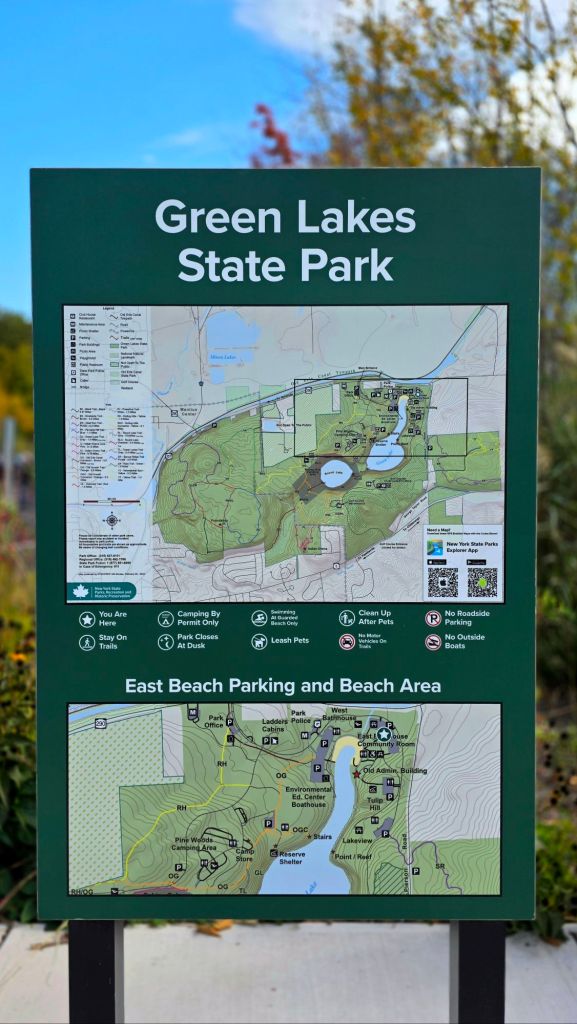
There are two lakes in this park – Green Lake and Round Lake.
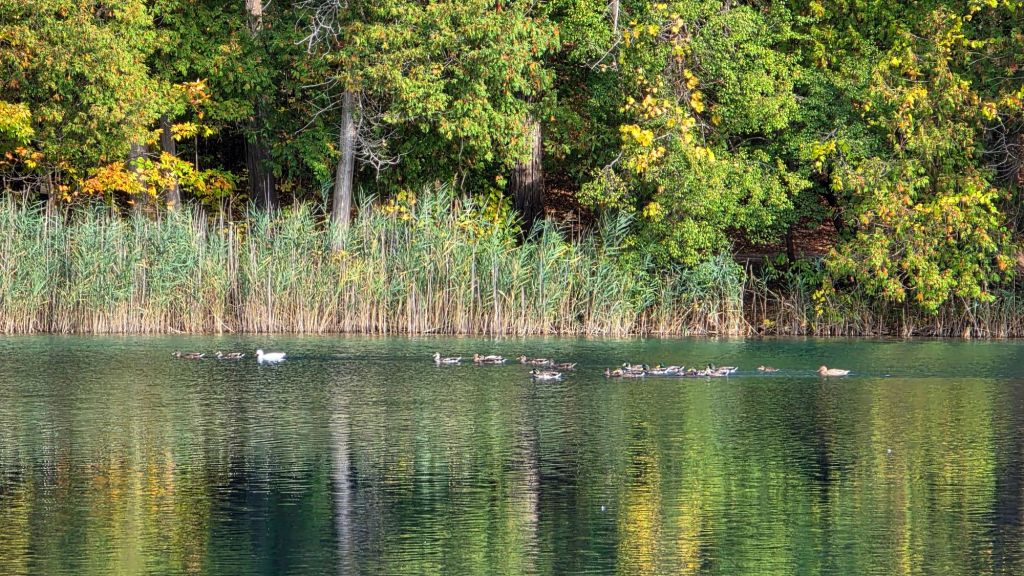
The water is SO CLEAR! It not only reflects everything above the surface beautifully, you can also see the growing reefs below!
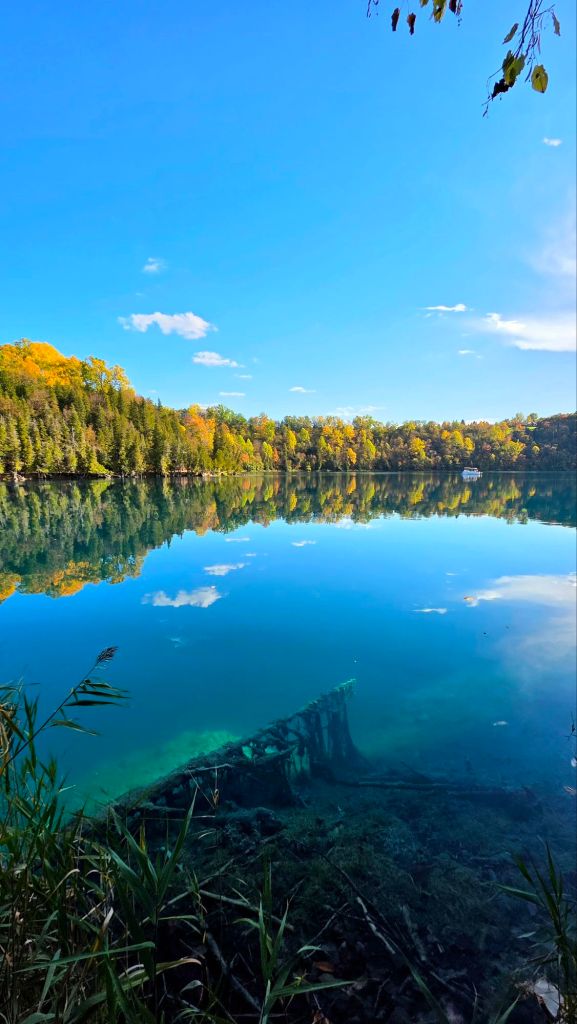
I can’t get over how gorgeous it is!
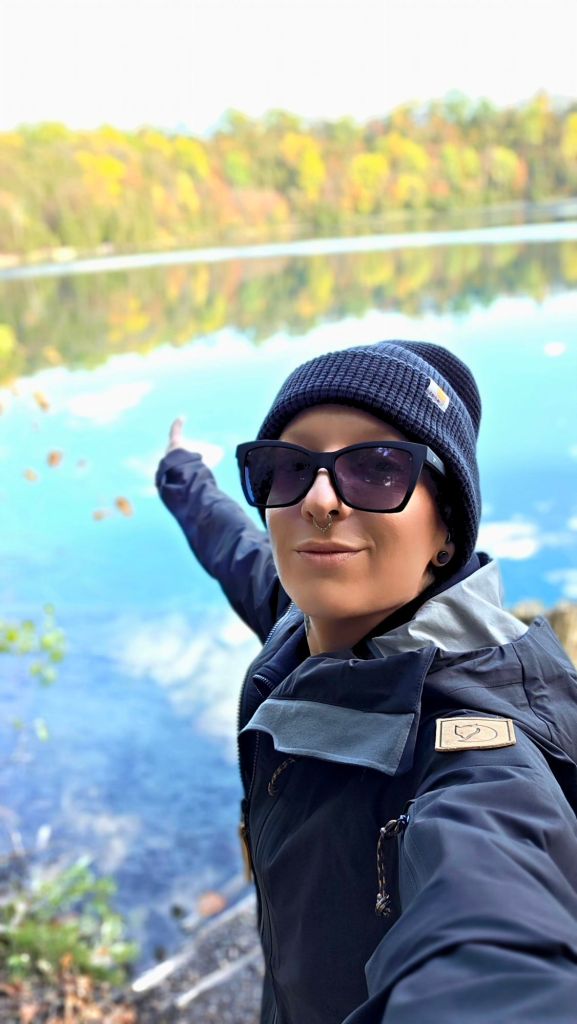
Recommended: Goodr Pop G sunglasses – New Wave Renegade
Recommended: Carhartt men’s black waffle knit beanie
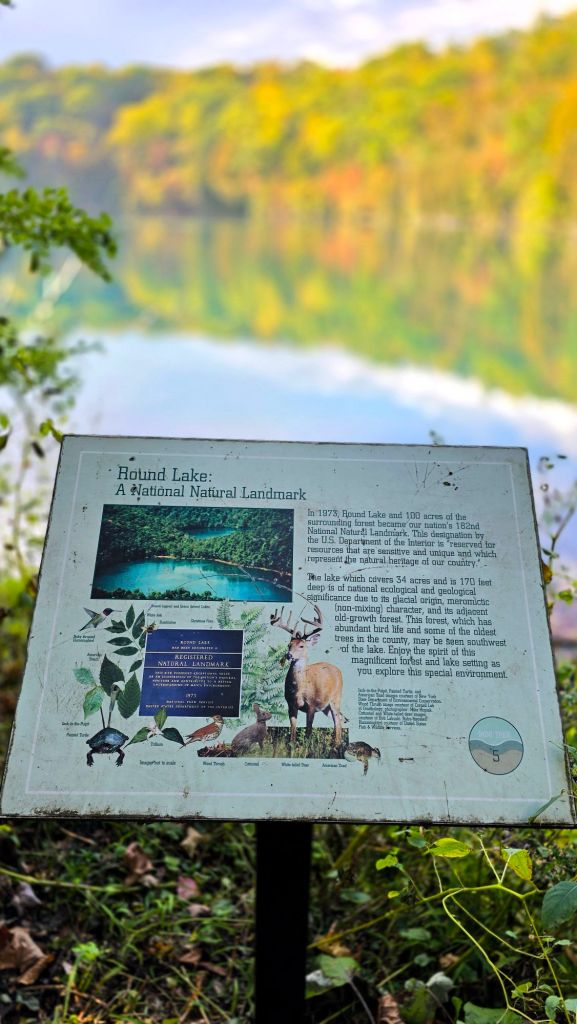
I love how the autumn foliage surrounding Round Lake glows when the sun hits it just right.
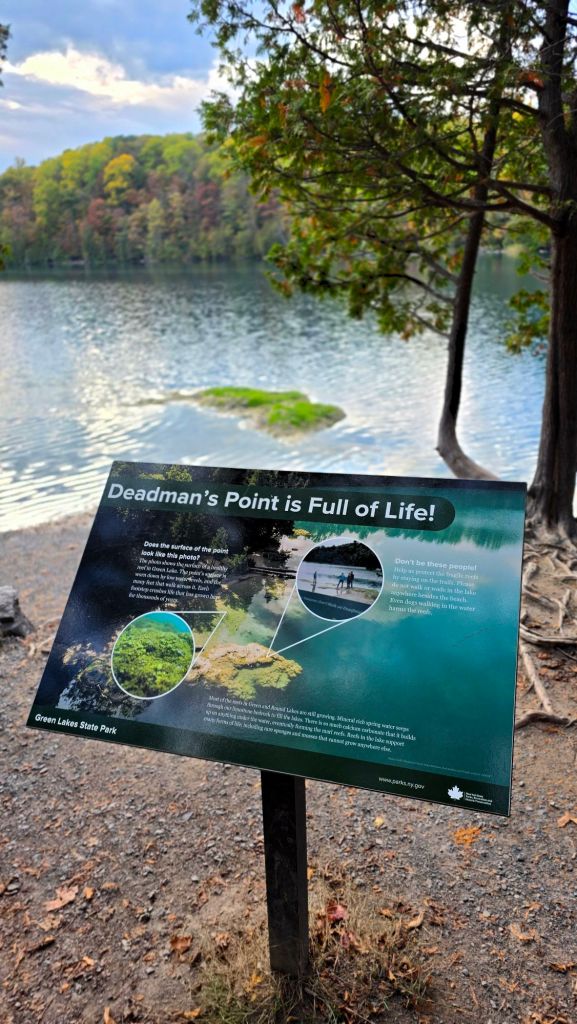
Want to know more about the reefs? (There are multiple, but let’s focus on the big obvious one.)
[From Google] The freshwater reef at Green Lakes State Park is a unique geological formation located at Deadman’s Point that is built by microscopic organisms called cyanobacteria. These organisms precipitate calcium carbonate from the lake’s water, creating a living limestone structure that also provides a habitat for other rare organisms like sponges and mosses. Visitors are asked not to walk on or disturb the reef, as it is fragile and being harmed by human activity.
Reef characteristics
- Formation: The reef is a living, growing structure formed over thousands of years by cyanobacteria and other microbes that precipitate calcium carbonate from the lake’s water.
- Location: The most prominent reef is at Deadman’s Point, but similar structures can be seen at other points around the lake’s shoreline.
- Unique ecosystem: The reef’s ledges and caves are home to rare sponges and mosses that provide shelter for fish and other animals.
- Habitat: The reef provides a substrate for aquatic plants and is an important part of the lake’s ecosystem.
Visitor information
- Stay off the reef: Visitors are prohibited from walking on the reef, as this can cause long-term damage to this fragile formation.
- Respect signage: Please follow all posted signs and rules, which are in place to protect this unique natural wonder.
- How to observe: You can view the reef from designated areas, and the water’s clarity allows for good visibility of the formations from a safe distance.
Awesome, right?!
It’s amazing how we have so many diverse ecosystems in the state of New York.






 Oh, Kae.
Leave a comment