Some weekends call for festivals, crowds and a full schedule. Others call for a lake.
On a mostly overcast September day, the SO and I headed to Cayuga Shores Wildlife Management Area in Lansing, New York, looking for a more gentle kind of hike.
More like wandering than hiking. The shores of Cayuga Lake are good for that.
Cayuga Shores Wildlife Management Area
Cayuga Shores Wildlife Management Area sits along the eastern shore of Cayuga Lake in the town of Lansing, Tompkins County.
It’s a relatively new addition to New York’s public lands. The 287-acre property officially became a state wildlife management area in 2024, protecting roughly 3,500 feet of undeveloped Cayuga Lake shoreline along with wooded hillsides, fields and streams.
The Finger Lakes Land Trust currently lists about 1.5 miles of trail here. The property provides habitat for wildlife including bald eagles and seasonal waterfowl, while the varied landscape supports native plants including trillium and wild ginger.
But what drew us there that day was simpler–
We just wanted to spend some time by the lake.

An Undeveloped Stretch of Cayuga Lake
There wasn’t anything complicated about this part of the day.
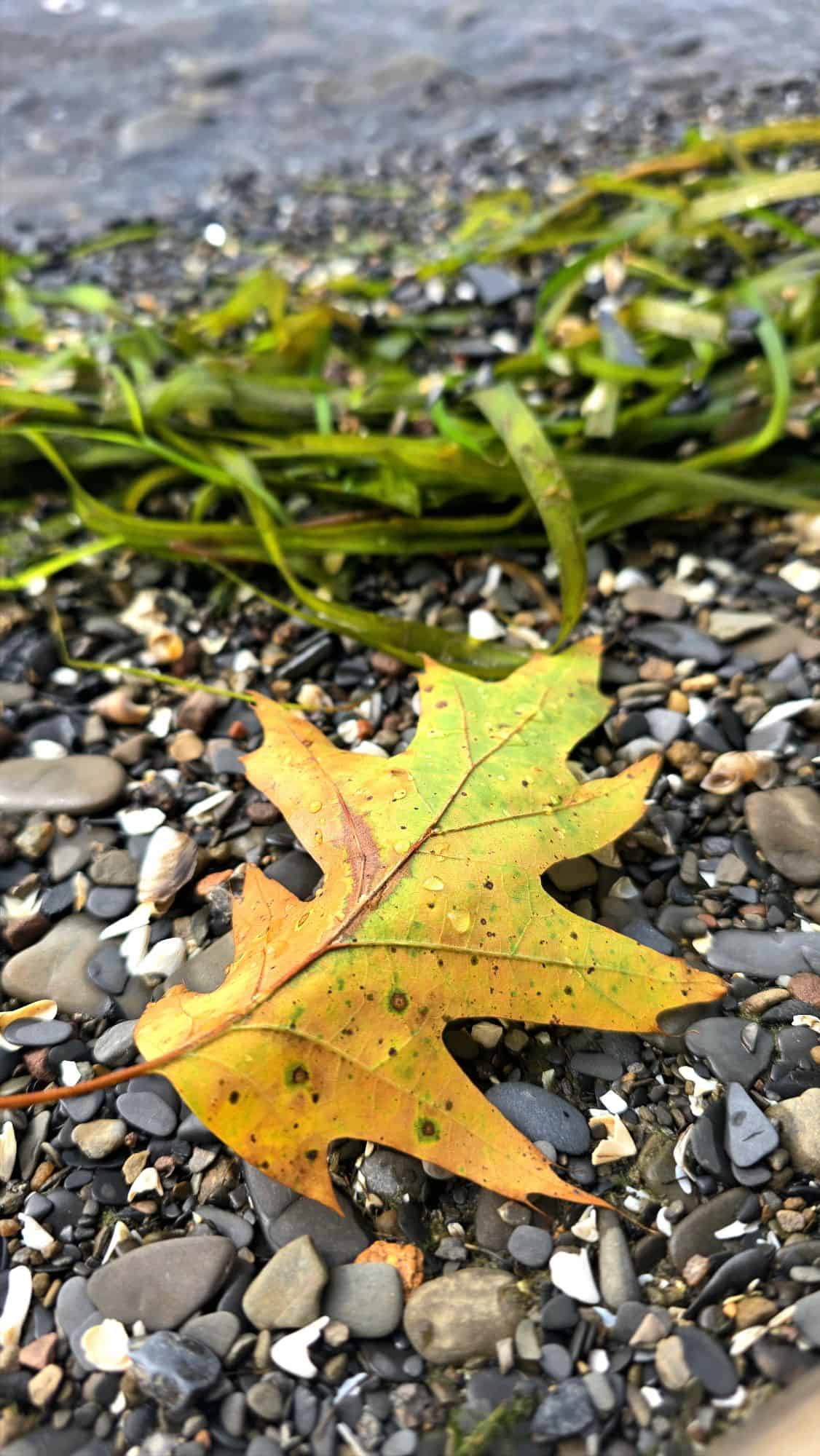
We wandered along the stones, looking for interesting things along the shore. I found a bunch of tumbled lake glass. And we listened to the little waves rolling in.
I recorded some of those waves for a separate Cayuga Lake ASMR video, because the natural sound was exactly what we’d been looking for when we decided to skip the crowds that weekend.
Sometimes going outside is less about how many miles you can hike or how many things you can fit into one day and more about giving your brain something completely different to process– moving water, rocks beneath your feet, mushrooms growing from a tree, wind coming across a lake…
Cayuga Shores was very good for that.
Finding Chicken of the Woods
Growing from a rotting tree near the Cayuga Lake shoreline was a beautiful cluster of Chicken of the Woods (Laetiporus species), its bright orange and yellow shelves standing out dramatically against the surrounding forest.
It’s one of the more recognizable edible wild mushrooms, although — as with any wild mushroom — positive identification is essential before considering eating it.
Finding fungi is one of the things that has made hiking even more interesting for me. Once you start learning what grows in these forests, there’s suddenly something to look for at practically every level—from the canopy overhead to a fallen log beside the trail.
And this was a particularly photogenic find.


Seasonal Waterfalls Along the Shore
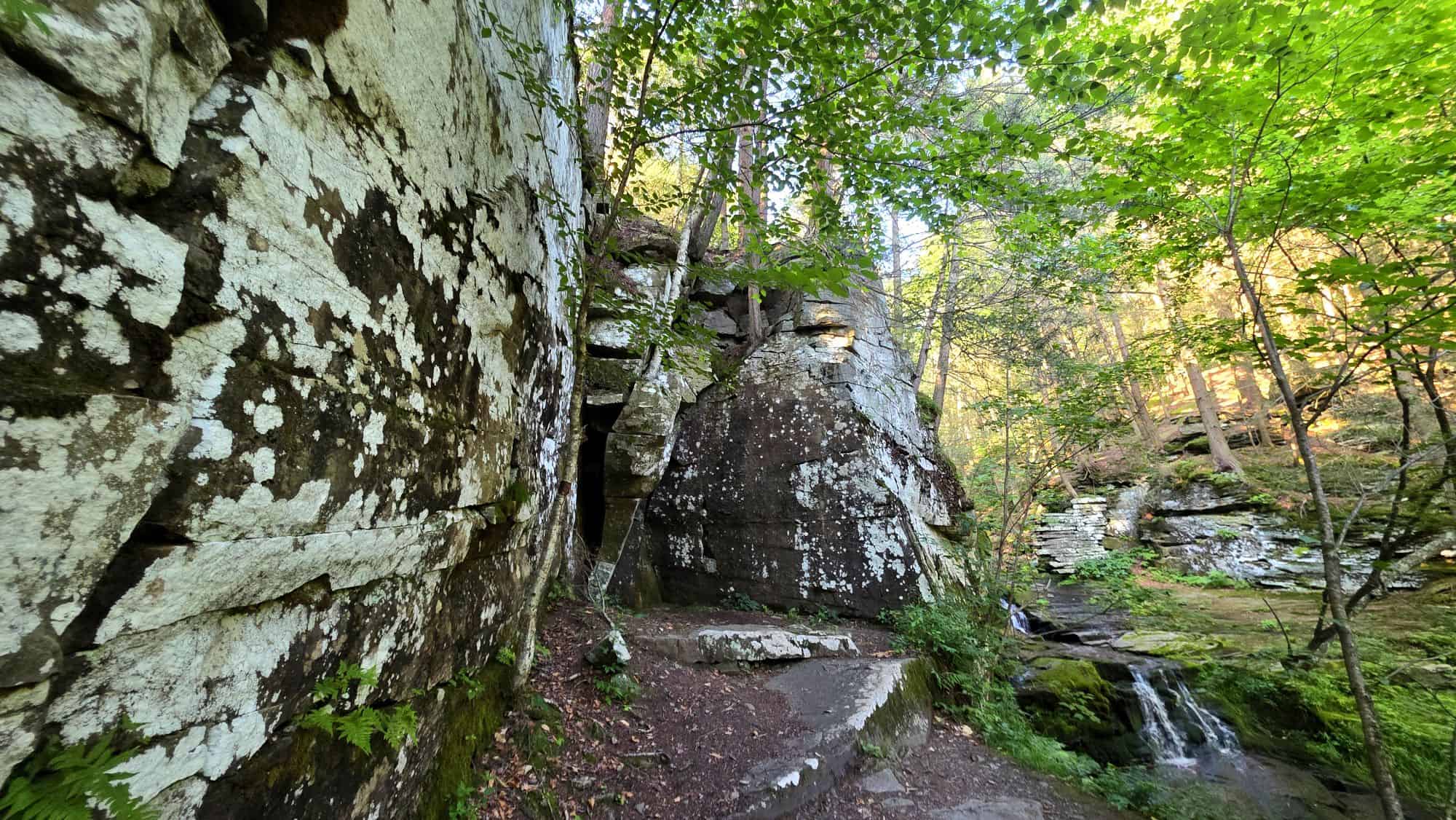
Another feature caught my attention as we explored: the cliffs and channels leading toward Cayuga Lake.
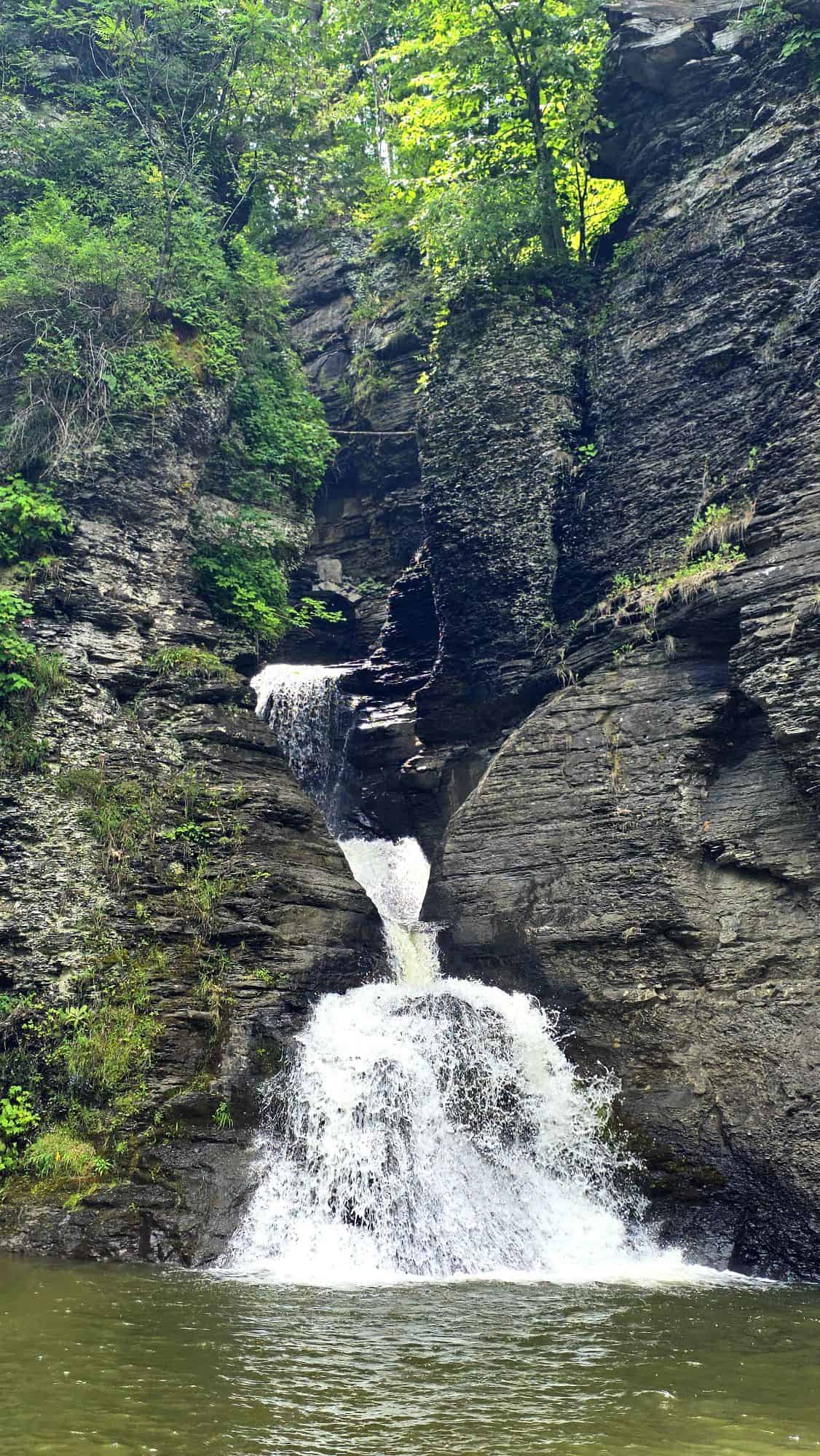
There wasn’t any visible water flowing during our visit, just areas that appeared to carry waterfalls during the rainier months.
The Finger Lakes Land Trust describes Cayuga Shores as having several small streams with cascading waterfalls, so this is one of those places that could look noticeably different depending on when you visit.
I’d love to return after a rainy stretch or during the wetter part of the year to see those same cliffs with water running over them.
That’s one of my favorite things about revisiting natural areas around Upstate New York. A trail isn’t really the same trail every time. Water levels change. Plants emerge and disappear. Fungi fruit for a while and are gone. Leaves change the amount of light reaching the forest floor.
There is always something different to notice.

From Bell Station to Protected Public Land
There’s another reason this particular shoreline is worth appreciating.
Cayuga Shores was formerly known as the Bell Station property, and at one point its future looked very different.
NYSEG had originally acquired the land for a proposed nuclear power plant that was never built. Decades later, the company planned to auction the property in 2021. More than 4,000 people signed a petition calling for the auction to be canceled, and the Finger Lakes Land Trust ultimately purchased the larger property in 2022 after a community conservation effort.
In 2024, the 287-acre lakeshore portion was transferred to the New York State Department of Environmental Conservation, creating today’s Cayuga Shores Wildlife Management Area and permanently protecting public access to this section of Cayuga Lake.
It’s especially significant because public shoreline isn’t something you can take for granted here. During the original Bell Station conservation campaign, the Finger Lakes Land Trust reported that about 90% of Cayuga Lake’s eastern shoreline was privately owned.
We weren’t simply walking beside a pretty lake.
We were able to walk there because people decided this particular piece of the Finger Lakes was worth keeping undeveloped and accessible.

Visiting Cayuga Shores Wildlife Management Area
Cayuga Shores WMA is in Lansing, Tompkins County, New York, on the eastern side of Cayuga Lake. The Finger Lakes Land Trust currently lists the property at 287 acres with approximately 1.5 miles of trail. Activities associated with the WMA include hiking, wildlife watching, fishing and hunting.
Because this is a Wildlife Management Area rather than a conventional state park, I’d recommend checking current NYSDEC information and regulations before visiting, particularly during hunting seasons.
And don’t necessarily expect the landscape to look exactly like ours did.
Those dry waterfall channels may be flowing. The forest will change with the seasons. Different birds and plants will come and go.
That’s part of the appeal.





Leave a Reply